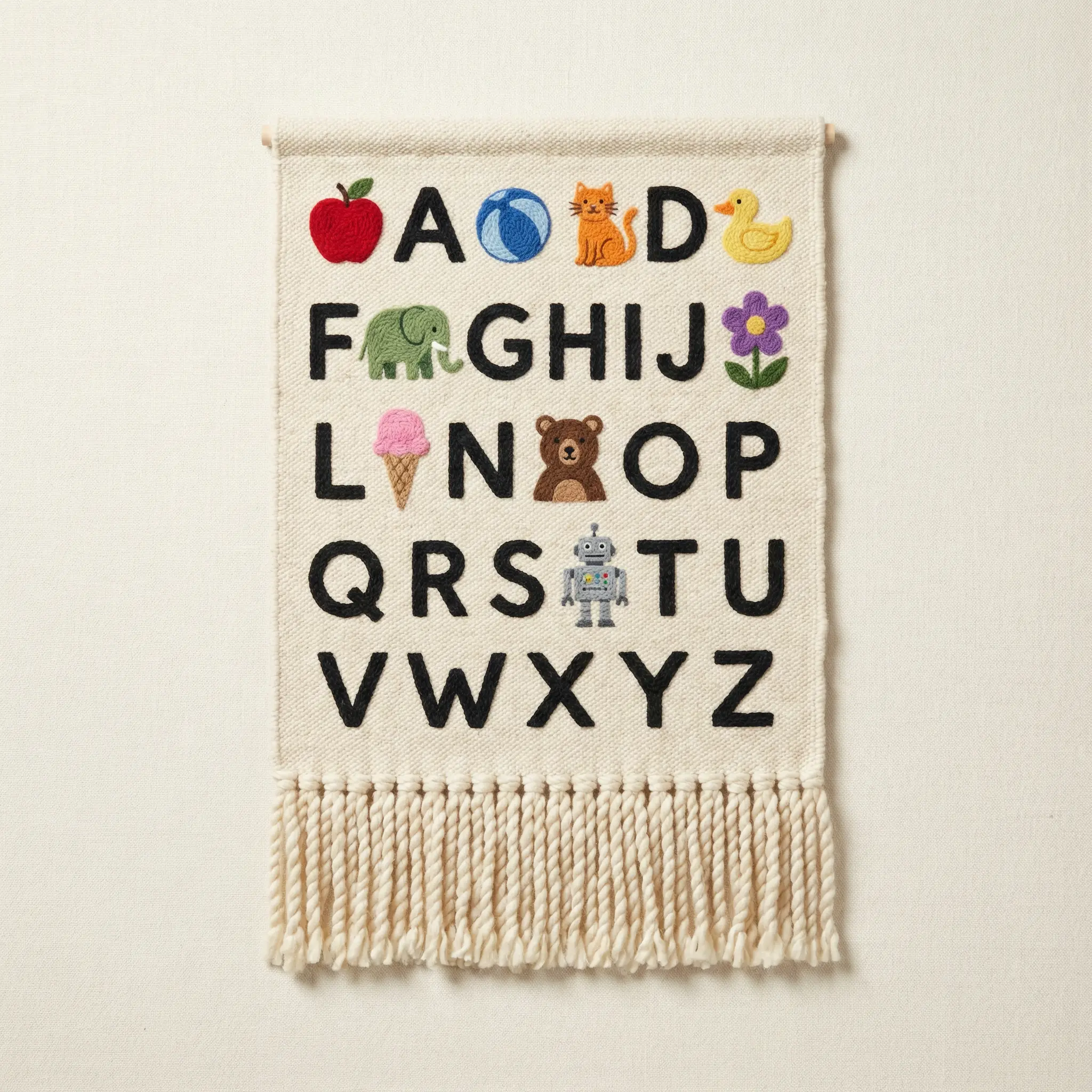
Walk into any high street homeware shop and you'll find shelves full of affordable decorative items. Printed wall hangings for under £20. Machine-made textiles in every colour imaginable. It's tempting, isn't it? Why spend more on a handmade piece when you could fill your home with budget-friendly alternatives?
It's a fair question, and one we hear often. So let's explore the real differences between handmade artisan goods and their mass-produced counterparts—and why, for many families, investing in quality makes sense.
The True Cost of "Cheap"
That £15 wall hanging might seem like a bargain, but have you ever wondered how it's possible to produce, ship, and sell a decorative item for so little? The answer usually involves some combination of the following:
Low-quality materials. Mass-produced textiles often use synthetic fibres that look acceptable at first but quickly show wear. Colours fade, fibres pill, and the item loses its appeal within months rather than years.
Exploitative labour practices. Rock-bottom prices often mean rock-bottom wages for the workers who make these products. Fast fashion and fast homeware frequently rely on factories where workers earn poverty wages in poor conditions.
Environmental impact. Cheap goods are designed to be disposable. When they wear out or go out of style, they end up in landfill—contributing to the growing problem of textile waste that's choking our planet.
Hidden replacement costs. If you replace a cheap item every year or two, those costs add up. Over a decade, you might spend more on replacements than you would have on a single quality piece that lasts.
What Makes Handmade Different
Handmade artisan goods represent a fundamentally different approach to production. Here's what sets them apart:
Materials That Last
Our wool tapestries are made from natural fibres that have been used for centuries precisely because they endure. Wool is naturally resilient, resistant to stains and dust, and maintains its appearance for decades with minimal care.
The cotton backing, the wooden dowels, the careful construction—every element is chosen for durability. A handmade tapestry isn't designed to be replaced; it's designed to become a family heirloom.
Skilled Human Hands
There's a reason we call them "artisans" rather than "workers." The people who create our tapestries have spent years—often decades—developing their skills. They understand their materials intimately. They can adjust their technique to account for variations in the wool, correct small imperfections as they work, and make creative decisions that no machine could replicate.
This human element shows in the finished product. Look closely at a handmade tapestry and you'll see subtle variations in texture and colour that give it life and character. These aren't flaws; they're signatures of human craftsmanship.
Ethical Production
When you buy handmade, you can trace your purchase back to real people. You can ask questions about working conditions, wages, and environmental practices—and get real answers.
Our artisan partners work from their own homes, set their own schedules, and earn fair wages for their skills. There are no anonymous factories, no exploitative supply chains, no hidden human costs.
Environmental Responsibility
Handmade production is inherently more sustainable than industrial manufacturing. Natural materials biodegrade at the end of their life. Small-scale production doesn't require massive factories consuming vast amounts of energy. And because handmade items are built to last, they don't contribute to the cycle of consumption and waste that characterises fast fashion.
The Value Equation
Let's talk numbers. A handmade wool tapestry from Made For Interiors costs between £75 and £110, depending on size and design. A mass-produced printed wall hanging might cost £15-25.
On the surface, the handmade option is 4-5 times more expensive. But consider:
Longevity. Our tapestries are designed to last for decades. Many customers tell us they plan to pass their tapestries down to their children. A cheap alternative might need replacing every 2-3 years.
Daily enjoyment. You'll look at your wall hanging every day. A beautiful, high-quality piece brings genuine pleasure each time you see it. A cheap item that's already looking tired? Not so much.
Resale value. Quality handmade items retain value. If your circumstances change, a well-maintained artisan piece can be sold or gifted. Fast fashion homeware has no resale value.
Story and meaning. A handmade tapestry comes with a story—of the artisans who made it, the traditions they carry forward, the journey it took to reach your home. That story adds meaning to your space in a way that mass-produced items simply cannot.
Making the Choice
We're not suggesting that every item in your home needs to be handmade. That's neither practical nor affordable for most families. But we do believe in being intentional about the things that matter most.
A nursery is a special space. It's where your child will spend their earliest years, surrounded by the objects you've chosen for them. Isn't that worth investing in quality?
A living room is where your family gathers, where guests are welcomed, where memories are made. The pieces you choose for these spaces set the tone for your home.
When you're making decisions about these important spaces, consider:
What will this item look like in five years? In ten? Will it still bring you joy, or will it be showing its age?
Who made this, and under what conditions? Can you feel good about the human story behind your purchase?
What happens when I'm done with it? Will it end up in landfill, or could it have a second life?
What message does this send to my children? Are we teaching them to value quality and craftsmanship, or to see everything as disposable?
The Handmade Difference in Practice
Here's what our customers tell us about living with handmade goods:
"I was hesitant about the price at first, but three years later, our ABC tapestry still looks as beautiful as the day it arrived. My daughter is learning her letters from it now—exactly as I hoped she would."
— Sarah, London"We've moved house twice since buying our tapestry, and it's come with us each time. It's one of the first things we hang in a new place because it instantly makes it feel like home."
— James, Edinburgh"I love knowing that a real person made this with their own hands. When my son asks about the tapestry in his room, I can tell him about the artisans in Kashmir who created it. It's a connection to a bigger world."
— Emma, BristolChoosing Quality
At Made For Interiors, we believe that beautiful, ethically-made goods should be accessible to families who value quality. That's why we work directly with artisans to keep our prices fair, and why we're transparent about our production process.
Every tapestry we sell represents hours of skilled work, centuries of tradition, and a commitment to doing things the right way. When you choose handmade, you're not just buying a product—you're supporting a different way of making and consuming.
And that's a choice you can feel good about.
Ready to experience the handmade difference? Browse our collection of hand-stitched wool tapestries and leather goods, each one crafted with care by skilled artisans.